Overview
My Role
I worked across five surfaces of American Century Investments\' digital experience: Contentful migration, landing pages, design systems, client portal, and the internal ESG dashboard. Each one had its own constraints, but they all rolled up to the same goal: bring a fragmented set of investor-facing tools onto a shared foundation that the rest of the business could build on.
Process
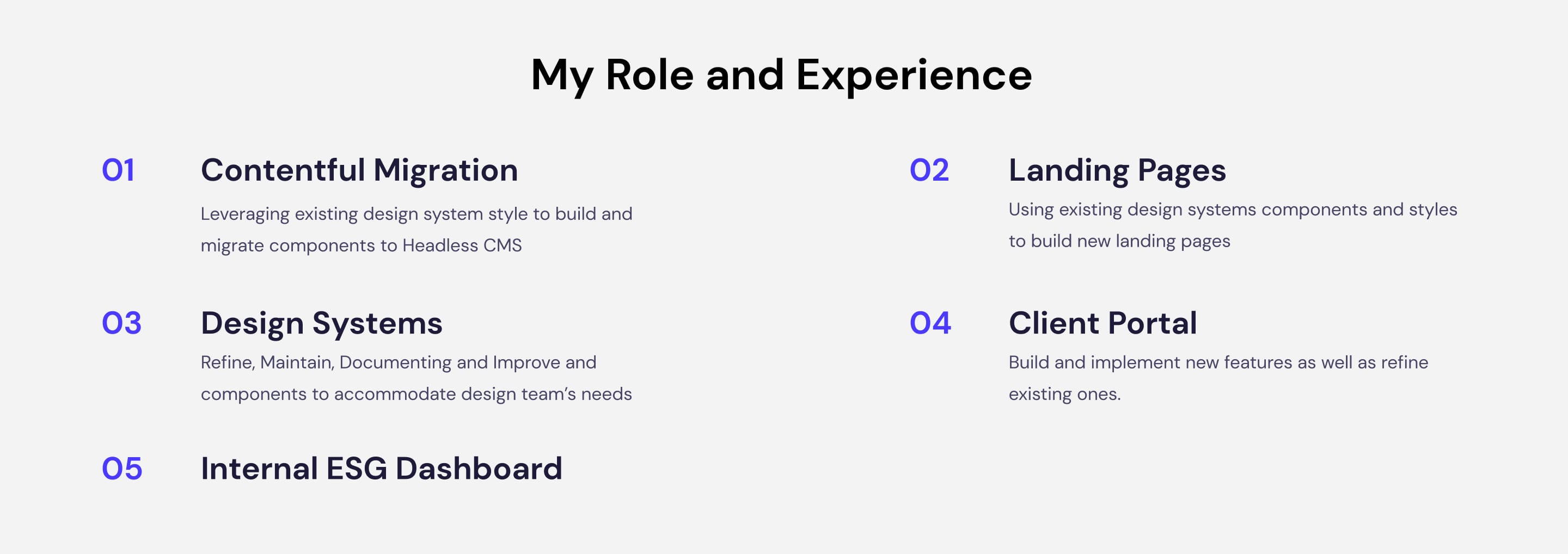
Same shape across every workstream: understand the problem, the user, and the business context, then identify the highest-leverage opportunities, then execute with the team that owns the surface.
Typical Work Flow
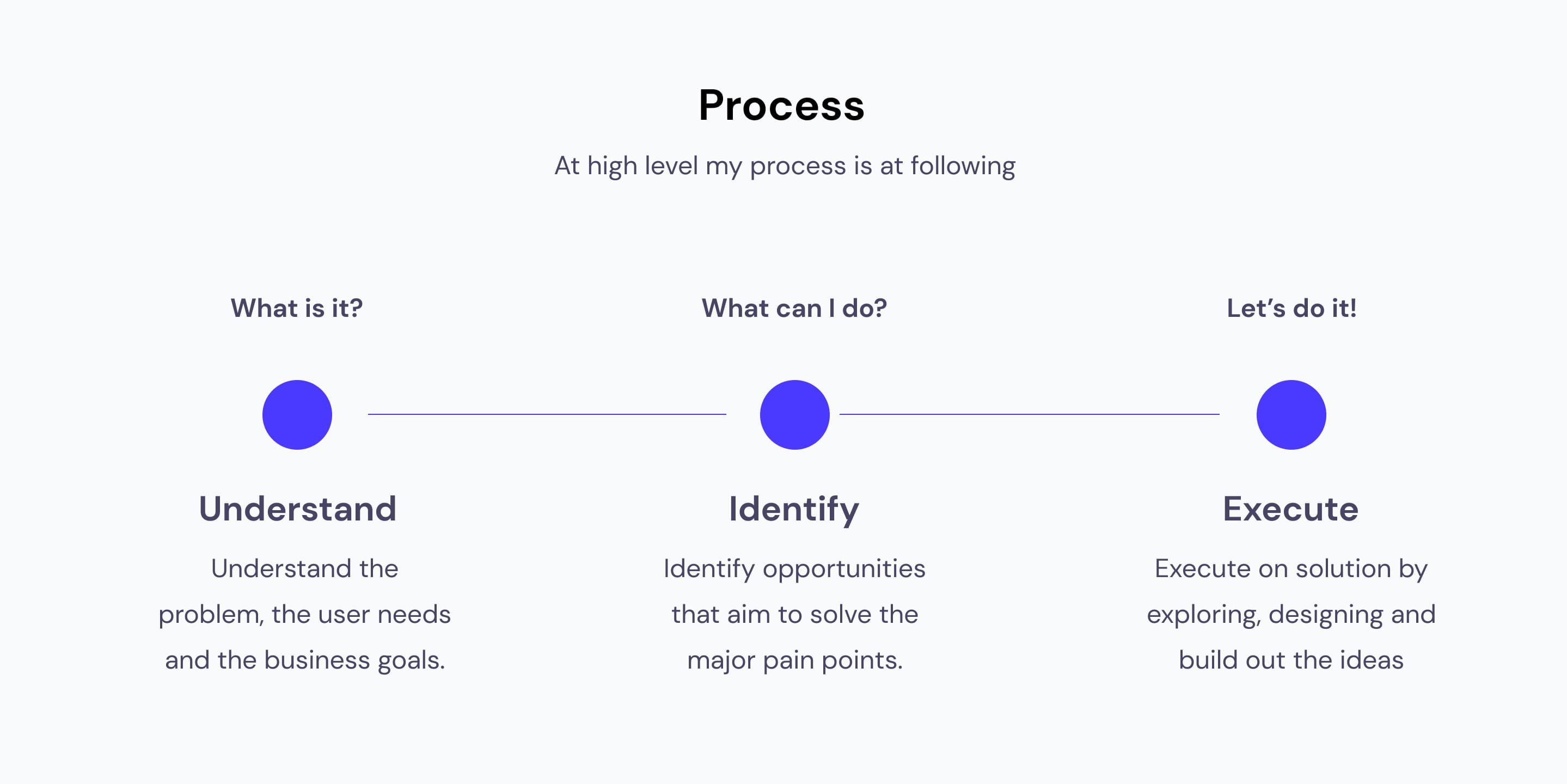
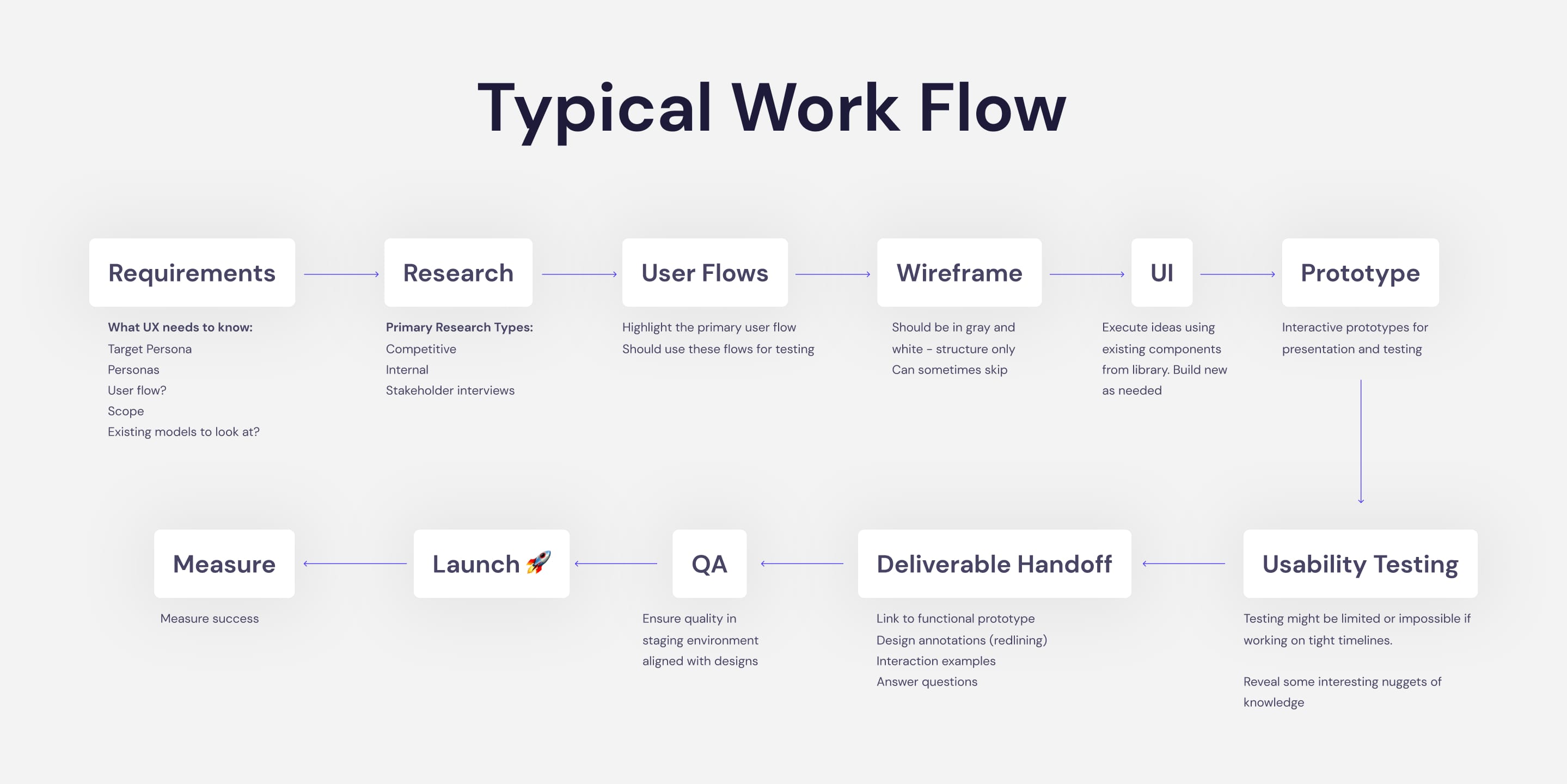
Inside each project, the work moved through requirements, research, user flows, wireframes, UI, prototypes, usability testing, deliverable handoff, QA, launch, and measurement. Some steps got compressed under tight timelines, but the structure stayed the same.
Contentful Migration
Why Contentful
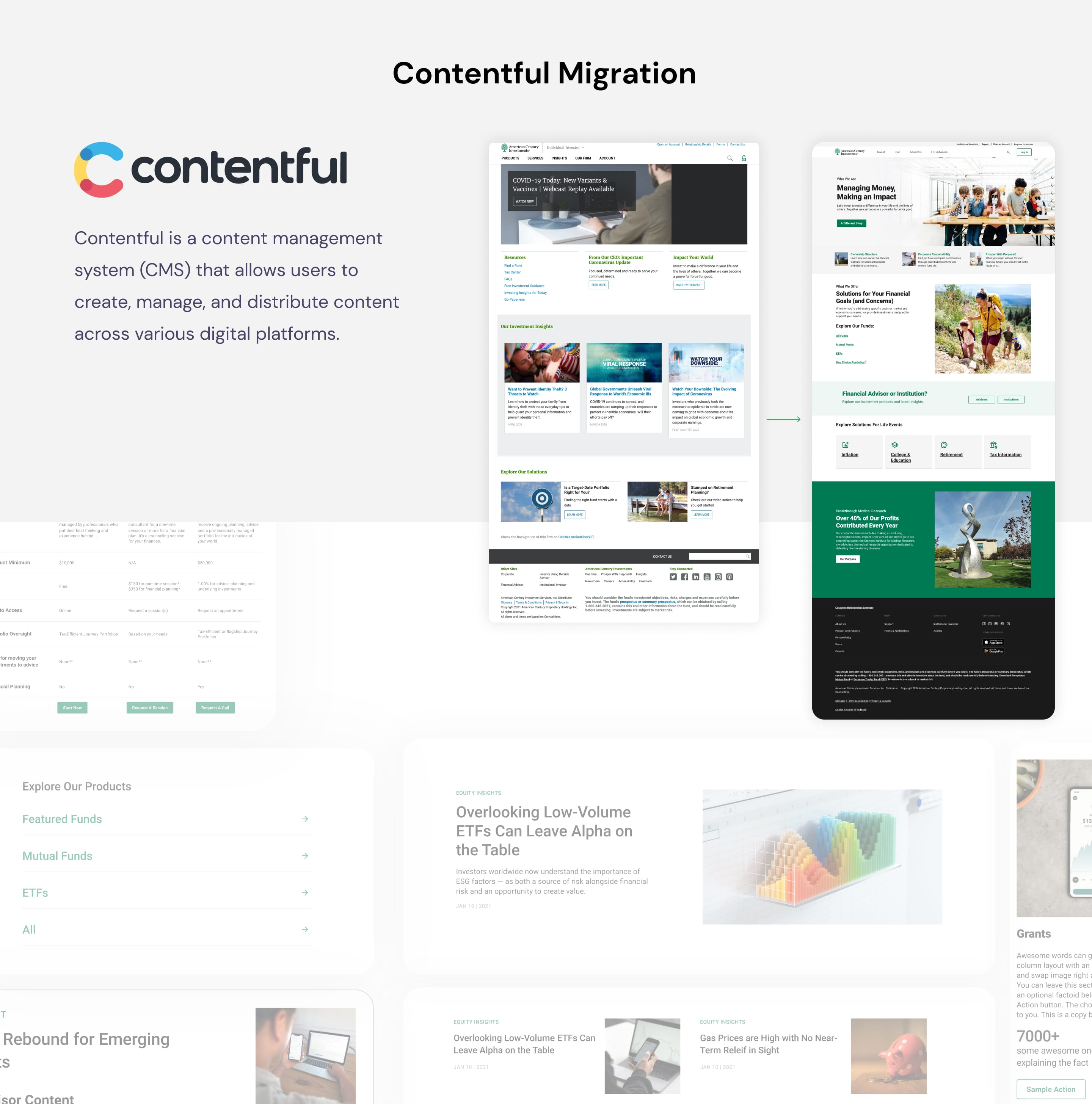
Marketing and product needed to ship pages without filing engineering tickets. The legacy stack made every change a release. Contentful gave us a headless backbone that the team could compose from, but only if the design system and the content model were designed together.
Approach
I leveraged the existing design system style to build and migrate components into Contentful, mapping each marketing surface to a small set of reusable blocks. Editors could re-arrange sections and variants without breaking the brand or the layout.
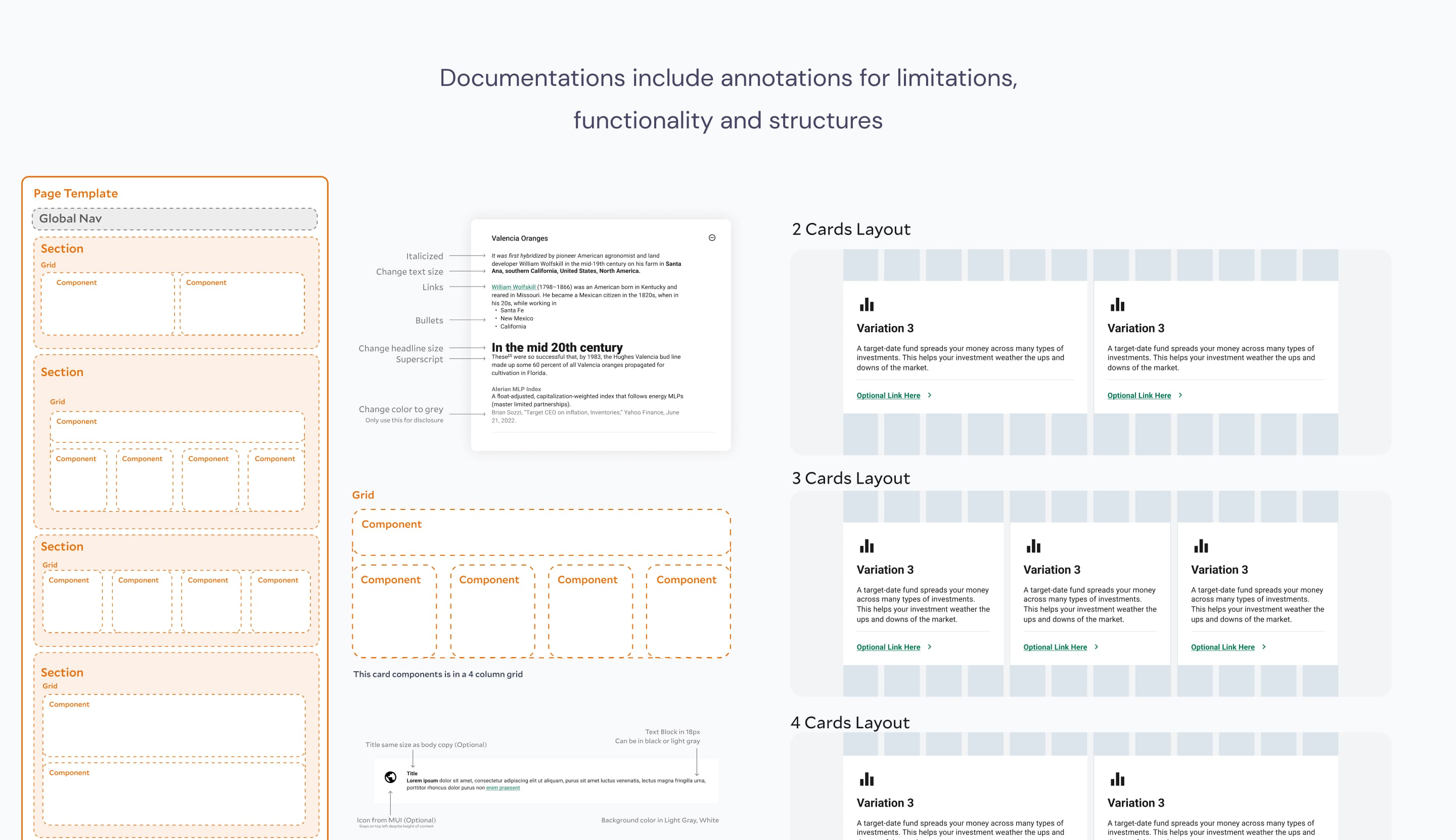
Documentation includes annotations for limitations, functionality, and structures.
Design Systems
Foundations
I inherited a maturing design system and elevated it: aligning typographic scale, form components, alerts, color tokens, and buttons across the ecosystem so that every team pulled from the same source of truth.
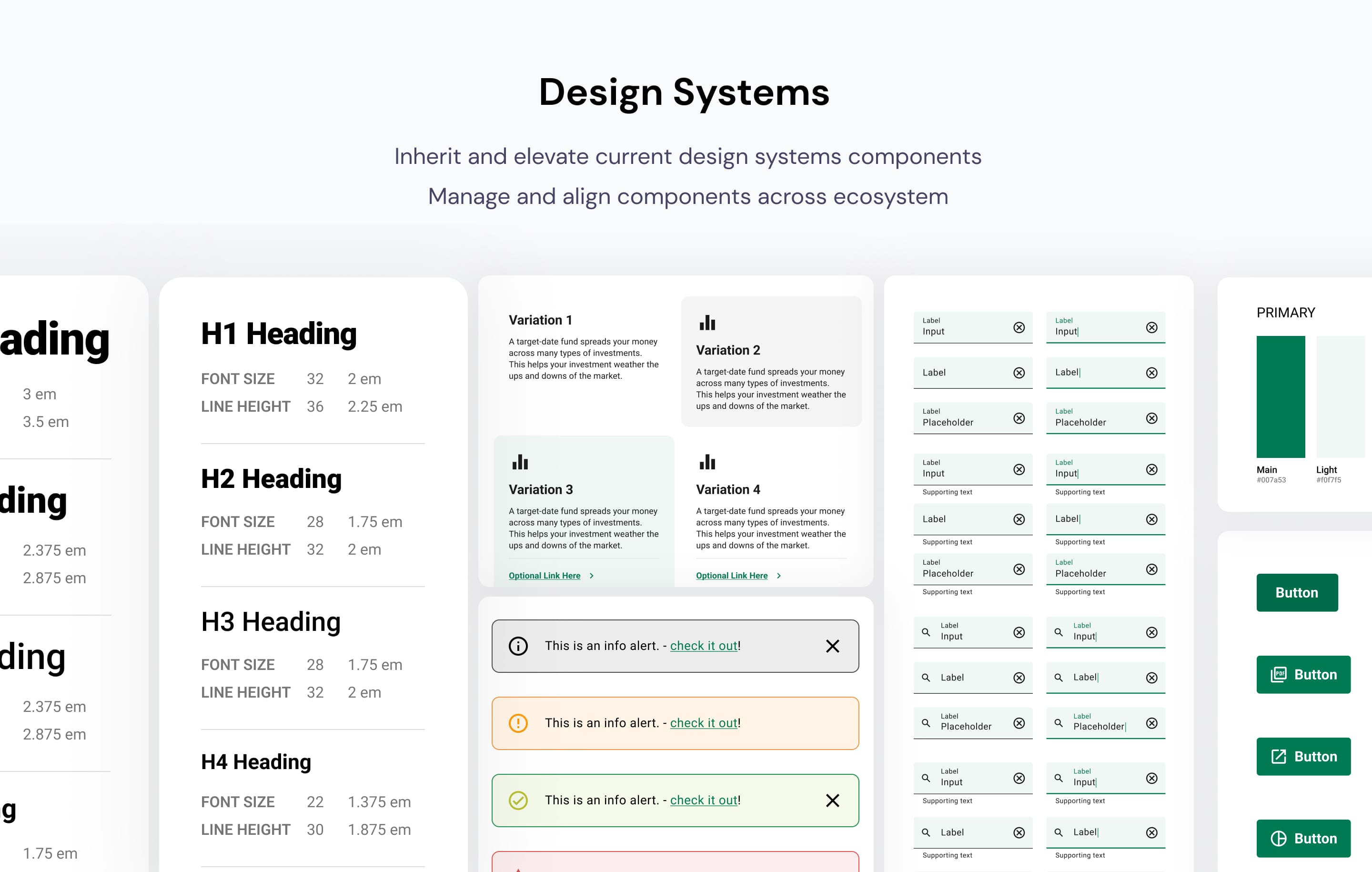
Inherit and elevate current design system components. Manage and align components across ecosystem.
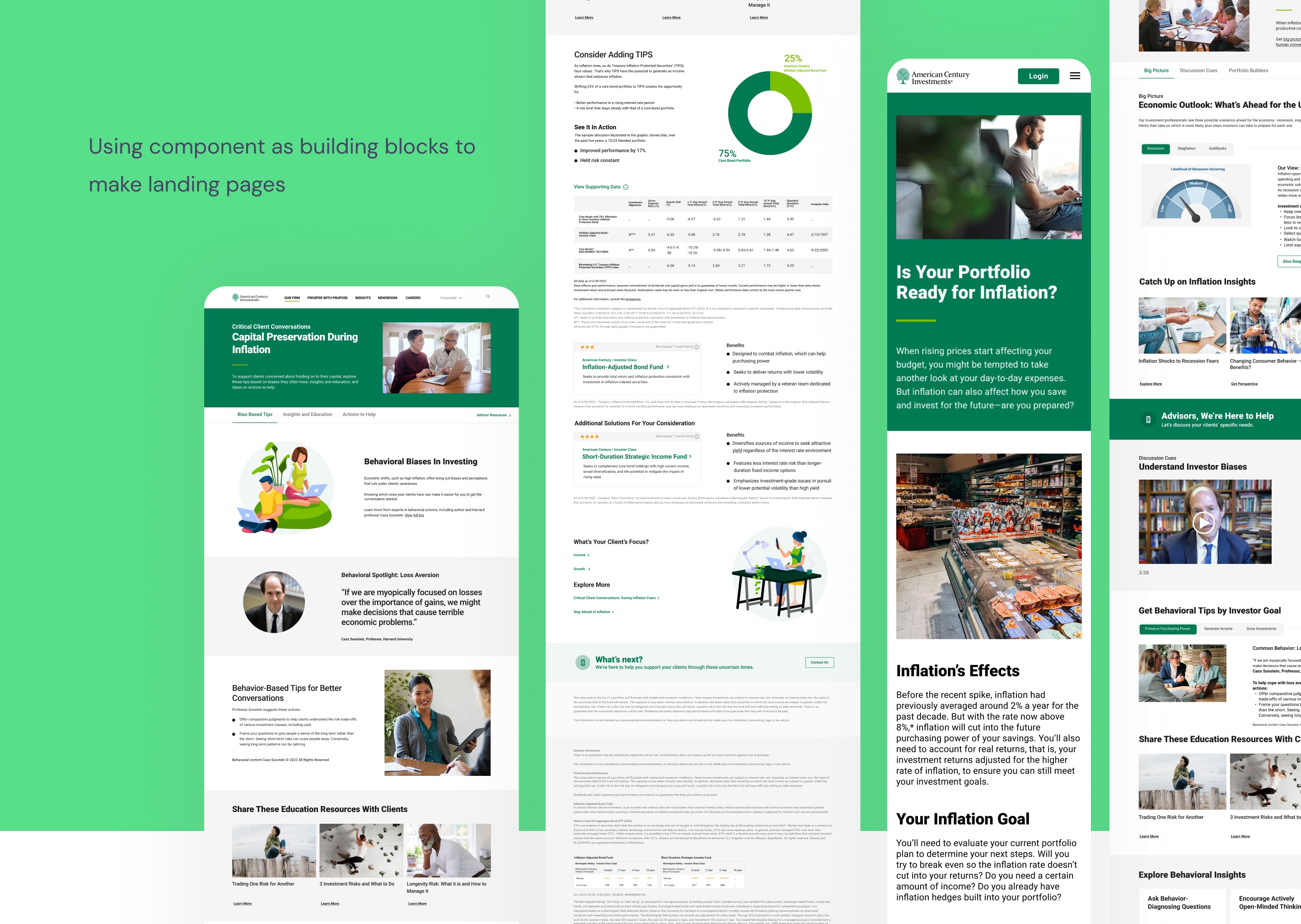
Components as Building Blocks
The same components powered the marketing site and the client portal. Landing pages were composed from system blocks rather than designed page-by-page, so brand and behavior stayed consistent at scale.
Client Portal
Features
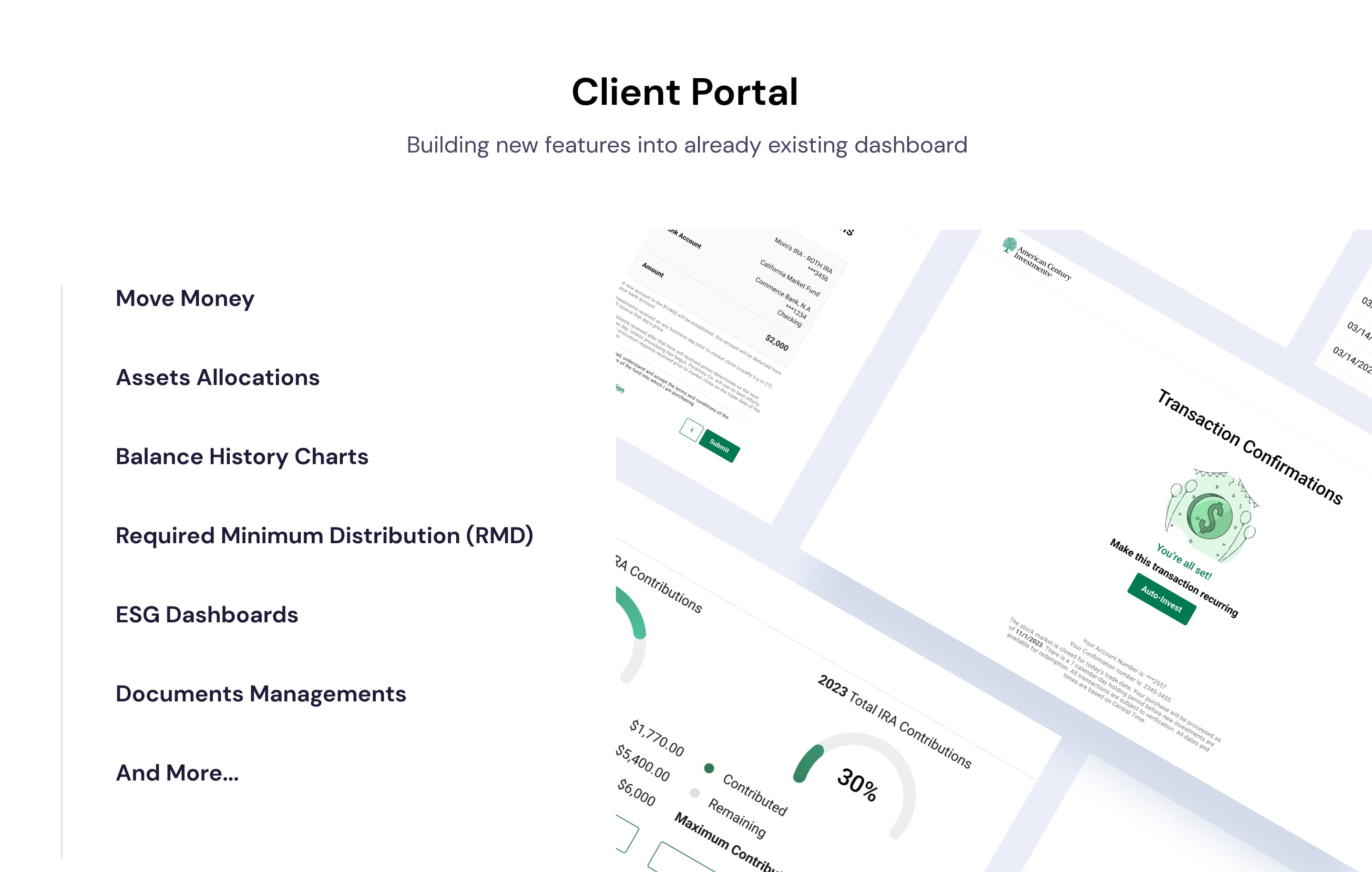
Building new features into an already mature dashboard: Move Money, Assets Allocations, Balance History Charts, Required Minimum Distribution (RMD), ESG Dashboards, Documents Management, and more.
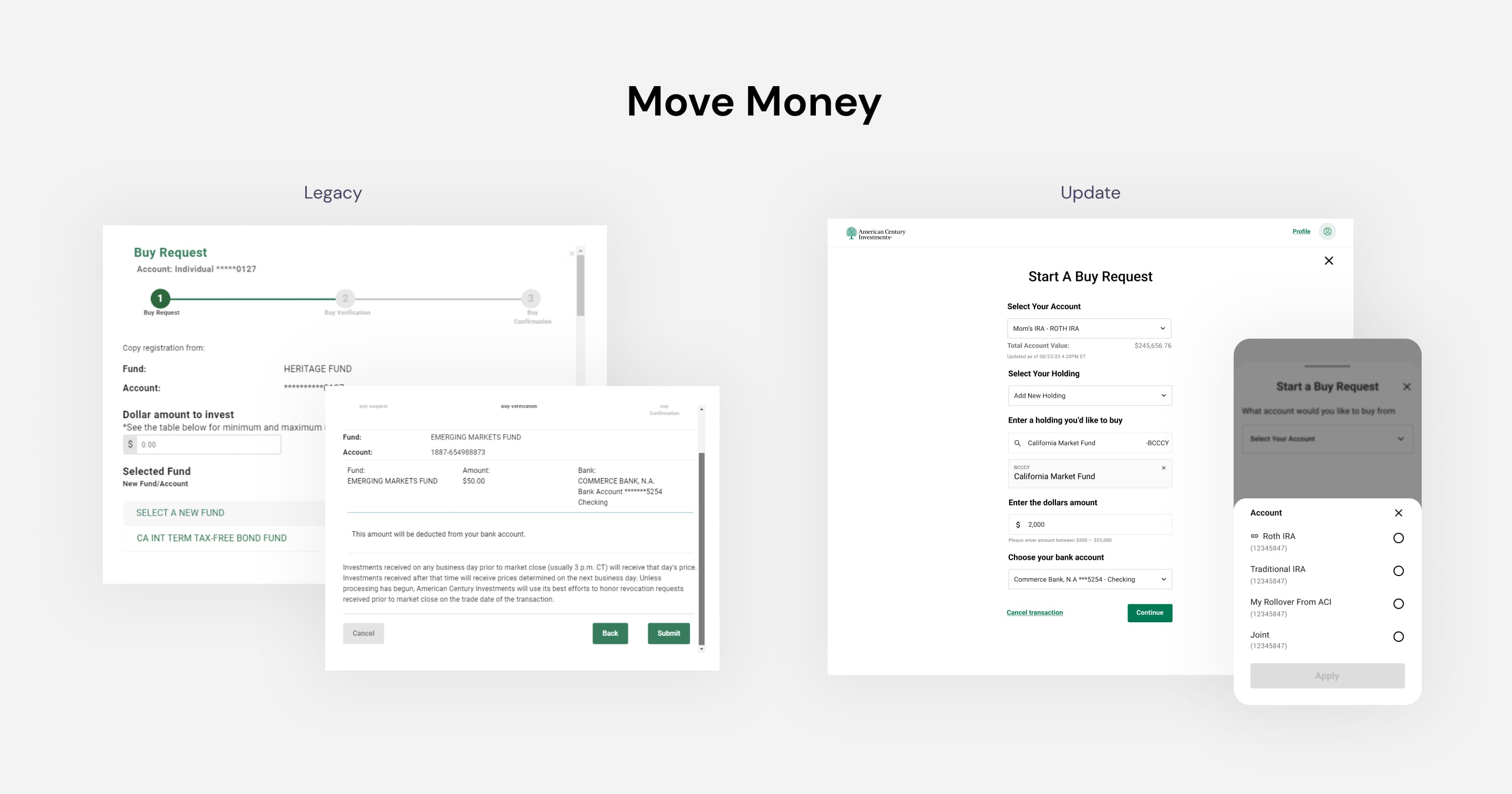
Move Money: Legacy vs. Update
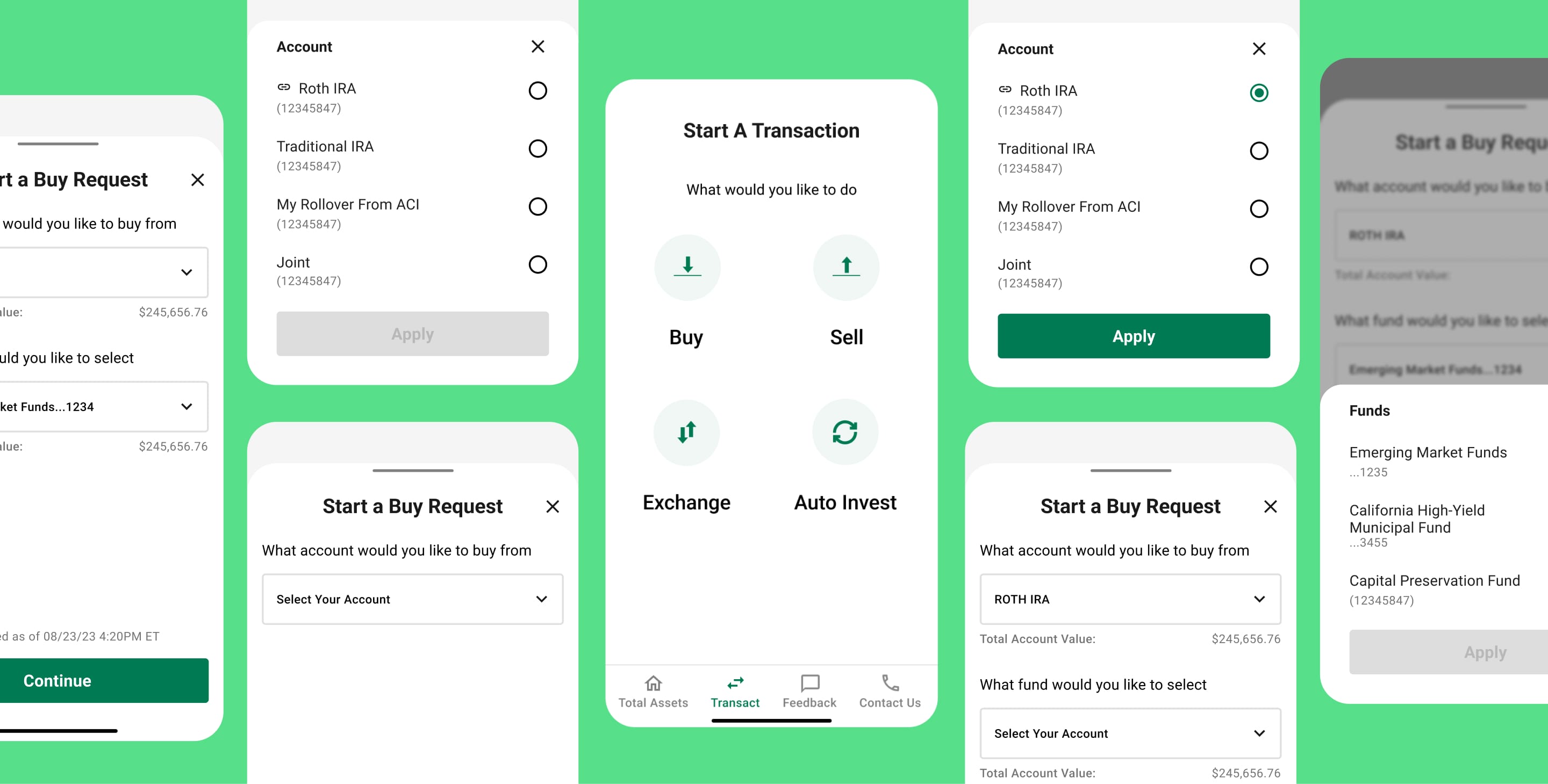
The legacy Buy Request flow buried critical inputs and gave users no sense of where they were in the process. The update reframes the same task around a clear single-page form, plain-language fields, and a confirmation pattern that doubles as a record.
Mobile
The same flows had to feel native on phone. Bottom sheets for account selection, single-action transaction tiles, and a persistent tab bar that kept Total Assets, Transact, Feedback, and Contact one tap away.